School Art Palette Kawaii Clipart Review
First Impressions: Translating Digital Charm to Thread
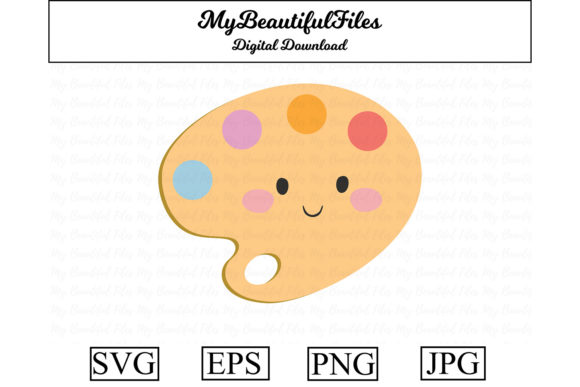
When I first opened the School Art Palette Kawaii Clipart files, my immediate reaction was one of cautious optimism. As an embroidery digitizer and product reviewer, I have seen countless cute graphics that look fantastic on a screen but become muddy, dense messes when translated into stitches. This particular illustration, however, strikes a promising balance. The kawaii aesthetic relies on clean lines, bold shapes, and expressive simplicity, which are actually the foundational pillars of successful machine embroidery design. The palette shape itself offers a natural boundary that contains the artwork, making it feel like a cohesive badge or patch rather than a floating graphic.
The mood is undeniably playful and nostalgic, evoking feelings of creativity and childhood learning. For a designer, this emotional connection is valuable, but technical viability matters more. Looking at the vector layers in the EPS and SVG formats, the separation of colors appears distinct. This is crucial because it suggests the design can be color-blocked effectively without excessive jump stitches or trims. When evaluating graphics for stitch-out, I am always looking for clear delineation between elements like the paint blobs, the brush handle, and the facial features. If these areas bleed together visually in the digital file, they will certainly merge into a solid lump of thread on fabric. Fortunately, this clipart seems structured with enough negative space and definition to support a variety of stitch types, from satin stitch outlines to fill stitch interiors.
Real-World Application: Stitching a Teacher Appreciation Tote
To truly evaluate the School Art Palette Kawaii Clipart, I approached it with a specific project in mind: a custom canvas tote bag intended as a personalized gift for an art teacher. Tote bags are a staple for any craft business or Etsy seller because they offer a flat, stable surface ideal for testing new designs. Canvas also has enough texture to hide minor tension issues while being sturdy enough to support moderate stitch density.
In this scenario, the design serves as the central focal point. Because the graphic includes multiple colors representing paint, it allows for vibrant thread colors that pop against natural or white canvas. However, the real test lies in the scale. On a tote bag, you have ample room to hoop a 5x7 or larger area, allowing the kawaii face details to remain legible. If I were stitching this for a commercial embroidery run of teacher appreciation merchandise, I would position the palette slightly off-center or paired with a monogram to create a balanced layout. The rounded edges of the palette shape make it forgiving during hooping; unlike square designs where a slight skew looks obvious, organic shapes accommodate minor placement shifts without ruining the finished product aesthetic.
For small shop owners creating inventory, this design bridges the gap between niche and broad appeal. It is specific enough for back-to-school season or holiday embroidery gifts yet generic enough to sell year-round to artists, students, and creative entrepreneurs. The versatility of having PNG, SVG, JPG, and EPS formats means I can use the high-resolution PNG for printable mockups on my website while using the vector files to generate a custom digital embroidery file tailored to my machine’s specific requirements.
Technical Considerations and Fabric Limitations
While the School Art Palette Kawaii Clipart is charming, experienced makers know that not every fabric is a suitable canvas. The kawaii style often involves solid blocks of color which, when stitched, can result in high stitch density. This presents challenges for certain materials. I would advise extreme caution when attempting this design on lightweight knits, sheer fabrics, or performance wear. The weight of the fill stitches could distort the garment or cause puckering that no amount of pressing can fix.
Similarly, textured fabrics like terry cloth or deep-pile fleece require careful planning. The small facial details characteristic of kawaii art can get lost in the nap of the fabric. If you intend to use this for baby embroidery on blankets or bibs, you must use a water-soluble topping to keep the stitches sitting on top of the fibers. Without it, the cute expression disappears into the fluff. For apparel decorators working with caps or curved surfaces, the horizontal span of the palette might be too wide for standard cap hoops. In such cases, resizing or modifying the aspect ratio is necessary, though altering proportions can sometimes distort the intended cuteness factor.
Dark fabrics present another variable. Since the product description notes that the watermark is removed from the final files, we assume clean lines, but we do not know if the original artist included a white underlay base. When stitching light-colored paint splatters onto navy sweatshirts or black aprons, a white underbase is mandatory to prevent fabric show-through. Always verify your digitizing software settings before running a production batch. Additionally, tiny lettering or intricate brush bristles may need to be simplified. What reads as a delicate line on a monitor often requires a minimum stitch width to prevent needle breaks or thread shredding on the machine.
Elevating Product Value Through Professional Execution
Using School Art Palette Kawaii Clipart effectively goes beyond just getting the design onto fabric; it is about how the execution influences customer trust and perceived value. A sloppy stitch-out with poor registration or bobbin thread showing through undermines the professionalism of your handmade product. Conversely, crisp edges, smooth satin borders, and vibrant thread colors signal quality. For Etsy sellers and creative entrepreneurs, this distinction determines whether a buyer sees a cheap craft or a premium boutique item.
The visual appeal of this design lends itself well to brand consistency. If you run a stationery shop or an educational resource blog, incorporating this embroidered motif into your merchandise creates a tangible extension of your digital brand. It adds a layer of warmth and approachability that standard printing cannot achieve. Furthermore, because the design is inherently giftable, it encourages bulk orders for classroom sets, workshop swag, or team uniforms. When customers recognize the care put into selecting and stitching appropriate design assets, their engagement and loyalty increase.
However, value is also tied to licensing and usage rights. Before listing any finished product derived from this clipart, confirm whether your purchase includes commercial rights for physical items versus digital redistribution. Protecting your business means respecting intellectual property. Clear communication about what you can and cannot sell prevents future headaches and maintains your reputation within the maker community.
Essential Designer Notes for Success
- Test Before Selling: Never run a new design directly on a client’s garment or expensive retail blank. Always perform a sew-out on scrap fabric similar to your final project to check tension, density, and size.
- Verify File Compatibility: While PNG, SVG, JPG, and EPS are excellent source formats, most embroidery machines require specific stitch files like DST, PES, or JEF. Ensure you have the software or service to convert these graphics into a usable machine embroidery design.
- Stabilizer Selection: Match your stabilizer to the fabric weight. Use cut-away for stretchy knits and tear-away for stable wovens. For the School Art Palette Kawaii Clipart, consider a medium-weight cut-away if stitching dense fill areas on apparel to prevent distortion.
- Contrast Checks: Test thread colors against your chosen fabric in natural lighting. Some yellow or pale green threads vanish on cream fabrics. High contrast ensures the kawaii details remain visible and photogenic for listings.
- Mockup Strategy: Utilize the included PNG files to create realistic digital previews. Showing potential customers how the design looks on a sweatshirt or tote bag before they order reduces hesitation and returns.
- Detail Inspection: Zoom in to 100% on your computer screen to inspect corners and curves. If the vector points are jagged, your stitches will be too. Smooth out nodes in your vector editor before digitizing to ensure fluid stitch paths.
- Wash Testing: If selling baby items or kitchen towels, wash and dry your test sample. Kawaii faces with large eyes can sometimes pull or gap after laundering if the stitch density is too loose or the underlay is insufficient.